

Masterplan of Play
Regensburg, Germany
Good practice - Play & Leisure
In Regensburg, Germany, the right to play is a city policy. Through a comprehensive, evidence-based planning approach known as Spielleitplanung, Regensburg has embedded child-friendly standards for play and public space into the legal and administrative fabric of the city, ensuring that every new development and every planning decision is measured against the question: is this good for children?
Regensburg's commitment to child- and family-friendly politics stretches back to the late 1980s and early 1990s, when the city began to develop a systematic approach to childhood in the urban environment - one that looked beyond single projects and short-term interventions toward sustainable structures. That vision has been institutionalised through the appointment of a designated coordinator within the Department of Municipal Youth Work, who holds formal lead authority over all aspects of family and child friendliness across city departments.
Spielleitplanung - literally "play master planning" - is an urban planning methodology developed with youth participation at its core. Commissioned by the city council, the process began with a comprehensive assessment of all public space in Regensburg: parks, playgrounds, roads, pavements, public squares, downtown areas and residential environments. Children and young people were central to this assessment, contributing their own knowledge of how they move through and experience the city. Multiple city departments collaborated throughout.
From this assessment, the city council developed and passed quality standards that now apply to all future planning and development. These standards cover green and open spaces - with a minimum of 1.5 square metres of playground space per inhabitant - as well as standards for urban parks, downtown public spaces, residential environments, and mobility. Streets should allow children to move independently and safely; public spaces should offer quality for all generations; residential areas should provide outdoor environments where families can gather and children can play. A companion municipal law extends these standards to private green space in new residential developments.
Alongside these physical standards, Regensburg has developed a formal concept and set of standards for youth participation in local decision-making, ensuring that children's voices are embedded in planning processes, not added as an afterthought. Schools, community organisations and the private sector are all brought together under the city's coordination, reinforcing the principle that a child-friendly city is built through sustained, cross-sectoral commitment.
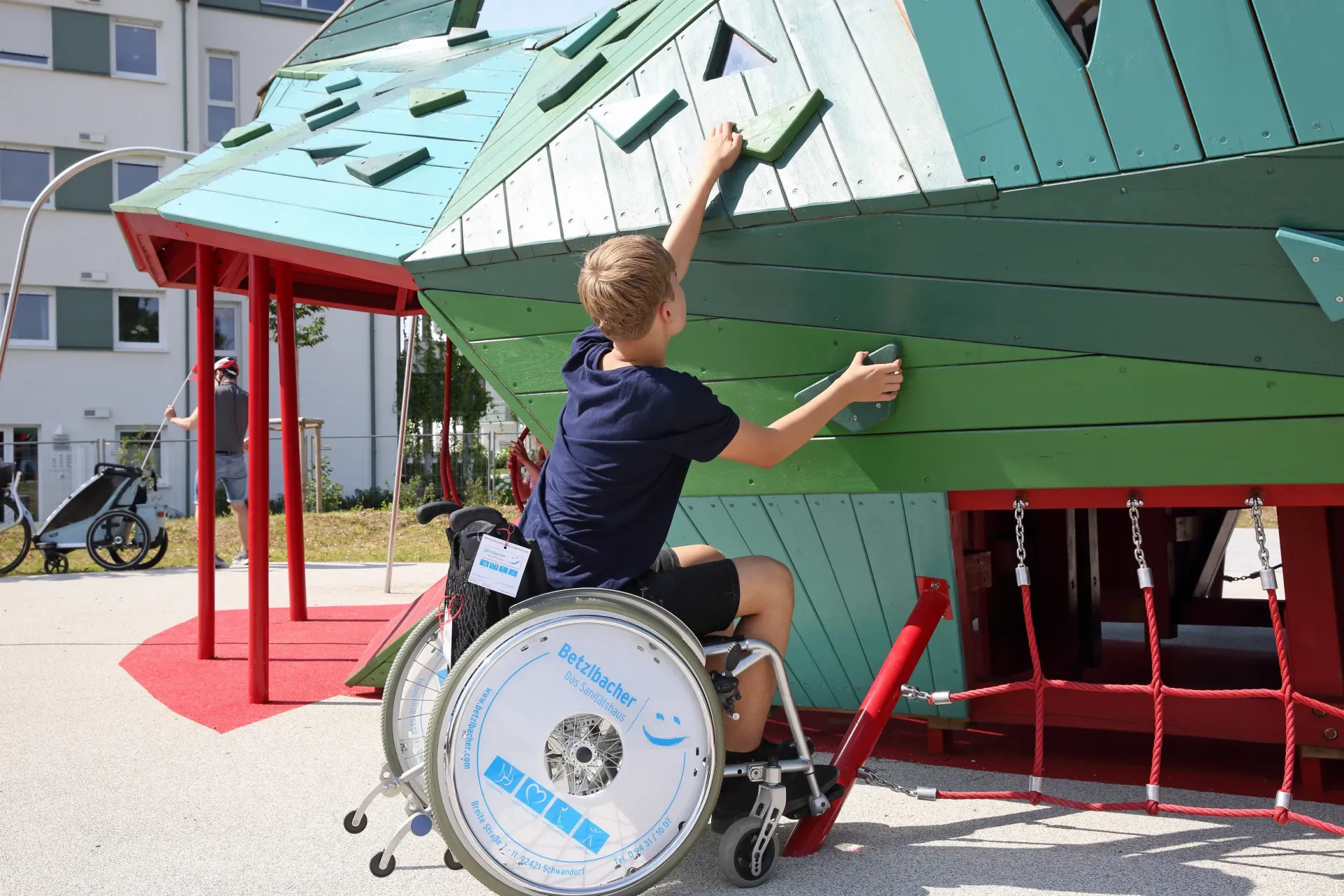
The results are visible across the city. Since the action plan was passed by the city council and implementation began, Regensburg has upgraded playgrounds and public spaces, redesigned residential environments, and built a green network that connects children with nature, adventure and free play across every neighbourhood.
Regensburg's core lesson for other cities is the value of the long view: sustainable structures outlast short projects. By anchoring child-friendly standards in city law, passing them through the city council, and placing their implementation under clear institutional authority, Regensburg has created a system that continues to deliver through changes in administration, budget cycles, and political priorities.
To learn more: https://www.regensburg.de/leben/familien/familienfreundliche-stadt/kinder-und-jugendbeteiligung/spielleitplanung


